Text
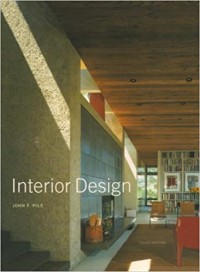
Interior Design. Third Edition
Interior design touches the lives of all of us in a very direct way. We all live in interiors, and most of us work, study, shop, and travel inside buildings, vehicles, and other enclosures. At one time or another, almost everyone has been an interior designer on a limited scale, when choosing a paint color or a rug, when buying furniture, or when arranging furniture in a new living place. For these reasons, interior design is—or should be—of interest to everyone. This book is concerned with the full range of interior design challenges, from the modest and everyday experiences at home and at work to full professional involvement in large projects. It is not a substitute for the level of professional training offered in design schools, for no one book of reasonable size can deal with every aspect of interior design at a level that will support professional practice. It is, rather, a survey of the field of interior design as it now exists. Thus, students embarking on a career in interior design will find in this book a comprehensive introduction to professional study. Readers interested in organizing residential interiors will find the basic information that they may need. This book will also provide a useful guide to those who will be choosing a designer or dealing with professionals in the field from time to time. Interior design is a complex and constantly changing field that has extensive overlap with related professions—architecture in particular. Almost from its beginnings, the field of interior design has faced a division between a focus on historicism through the decorative reproduction of historical styles in interiors that most often were residential and an architectural orientation allied to the early twentieth-century movement known as Modernism that was more concerned with larger projects, such as offices, hotels, restaurants, and public buildings. This polarization into two conflicting approaches to interior design has now become obsolete. Contemporary architecture has developed an interest in historicism, not in terms of imitation, but with a willingness to learn from the past and incorporate historical reference into contemporary design. Meanwhile, the general public has moved toward an awareness and acceptance of modern design even in residential spaces, which for many was a last holdout against anything contemporary. These changes in attitude have given rise to a new design vocabulary, less concerned with decoration in formal historic styles and more focused on developing good solutions to the real problems of modern environmental circumstances. At the same time, designers are increasingly interested in seeking help from other specialized fields, such as sociology, economics, and psychology, in an effort to bring creative artistic expression and practical service into a stronger unity. In this book there is no intention to take sides in a nonproductive conflict of views. Rather, the intent is to introduce the reader to the best of
Availability
Detail Information
- Series Title
-
-
- Call Number
-
729 Pil i
- Publisher
- New Jersey : Pearson., 2003
- Collation
-
605 p.
- Language
-
Indonesia
- ISBN/ISSN
-
9780130991324
- Classification
-
729
- Content Type
-
-
- Media Type
-
-
- Carrier Type
-
-
- Edition
-
Third Edition
- Subject(s)
- Specific Detail Info
-
-
- Statement of Responsibility
-
-
Other version/related
No other version available
 Computer Science, Information & General Works
  Philosophy & Psychology
  Religion
  Social Sciences
  Language
  Pure Science
  Applied Sciences
  Art & Recreation
  Literature
  History & Geography